
Reimagining nature is a dance with people
Carlsberg Foundation awards DKK 50 million to an interdisciplinary research centre that will investigate how natural processes can be restored while improving people's lives.
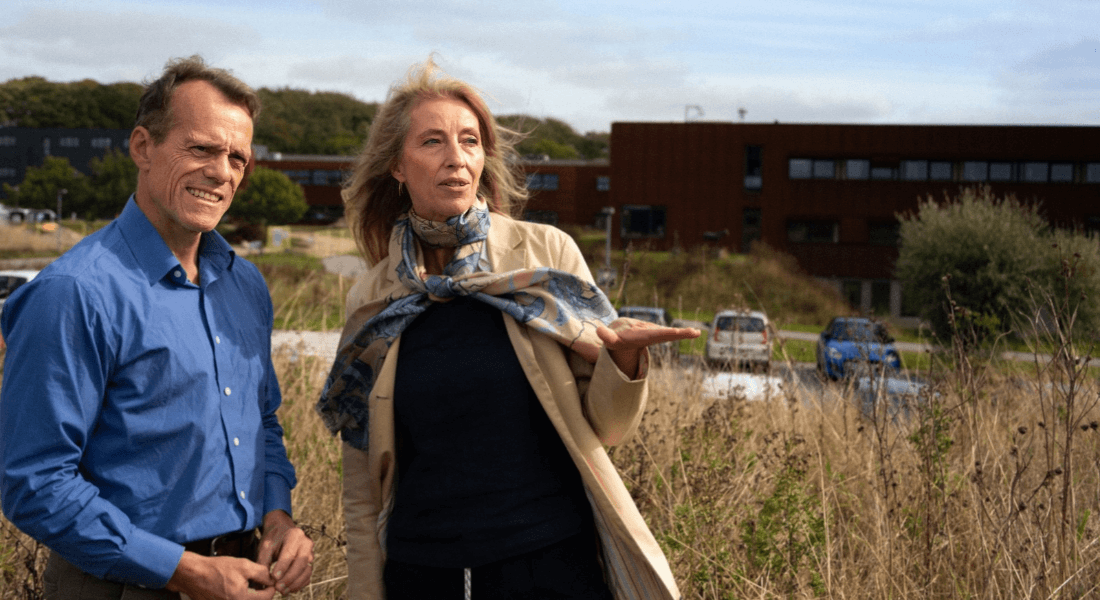
Billions are being invested in ecosystem restoration and climate adaptation, but not every project will succeed or deliver lasting results.
Ecosystems, landscape history, design and people’s relationship with the landscape all play an important role in determining whether ecosystem restoration succeeds. Yet these factors have rarely been studied together.
DanCER (Danish Centre for Ecosystem Recovery) will use a DKK 50 million grant from the Carlsberg Foundation to develop models that can predict landscape development and reduce the risk that major landscape transformations result in wasted resources and a loss of public trust.
“We invest substantial resources in ecosystem restoration from a biological perspective, but success also depends on the human dimension. As a landscape architect, I am fascinated by the ways people value and care for nature. Humanistic considerations such as aesthetics and beauty have never carried as much weight as scientific arguments such as biodiversity and carbon sequestration. That is something we want to change,” said Professor Ellen Braae, Department of Geosciences and Natural Resource Management, University of Copenhagen, who received the grant.
She will serve as co-director of the centre alongside Professor Samuel Cushman of the University of Southern Denmark.
Healing itself
For Ellen Braae, the purpose of ecosystem restoration is to support nature’s own capacity for healing.
“If you graze your knee, your body heals through a natural process. Nature also has an inherent capacity for regeneration. It can heal itself. Ecosystem restoration is about enabling nature’s own healing processes to unfold, improving soil and water quality so that more plants can thrive and more insects, beetles and animals can flourish throughout the food chain.”
The ambition is to contribute to a democratic approach to ecosystem restoration, where landscape transformation takes place together with the people who live and spend their daily lives in these landscapes.
New scientific field
DanCER brings together ecologists, landscape researchers and designers to study real-world landscape change as it happens. Using remote sensing data, historical records, field studies and interviews with people across Denmark, the research team will track what works, test alternative approaches, compare expected and observed outcomes, and continuously refine its models. In doing so, the centre will build a shared knowledge base to support future landscape transformation projects.
“As researchers from two different academic traditions, we need to learn to understand each other’s tools and methods. Biologists come from the natural sciences, while landscape architects come from design practice. We need to bring more perspectives into the conversation and create a common language. We have laid the foundations for a new scientific field,” said Ellen Braae.
DKK 150 Million for three research centres
DanCER is one of three interdisciplinary research centres supported by the Carlsberg Foundation to mark the foundation’s 150th anniversary. The three Carlsberg Foundation Interdisciplinary Research Centres will each receive DKK 50 million over a six-year period.Contact
Ellen Braae
Professor
Department of Geosciences and Natural Resource Management
E-mail: embra@ign.ku.dk
Phone: +45 35 33 17 92
Andreas Berg Jakobsen
Communications Consultant
E-mail: abja@adm.ku.dk
Phone: +45 35 33 31 76