
FoodDay 2026: Building Sustainable Food Systems Within Planetary Boundaries
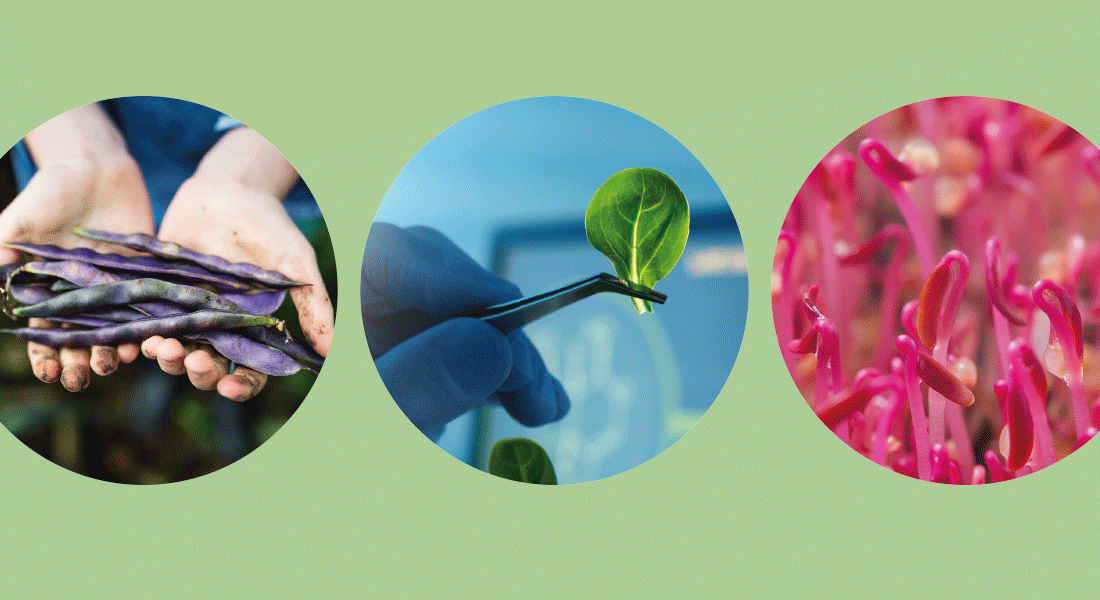
How can we reshape the way we produce, distribute, and consume food to ensure health, equity, and environmental resilience? Today, food production drives five out of six breaches of planetary boundaries. A transformation of the food system is fundamental to solving crises related to climate, biodiversity, and health. Join us for FoodDay 2026, where we invite the entire value chain to discuss how we can build sustainable and resilient food systems for the future.
Participation is free of charge.
SIGN UP FOR FOODDAY 2026
When all spots for the morning session/the entire FoodDay are fully booked, you can join the waiting list by writing to Cecilie Frantsen at cf@science.ku.dk.
Morning Programme
09:00-10:00: Arrival and Registration
Light breakfast and coffee.
10:00-10:05: Welcome and opening remarks
Bo Jellesmark Thorsen, Dean - Faculty of Science
Line Friis Frederiksen, journalist, Moderator.dk
10:05-10:30: Keynote
Keynote speaker Dr. Marco Springmann, Senior Researcher on Environment and Health | Environmental Change Institute | University of Oxford, Professorial Research Fellow in Climate Change, Food Systems and Health | Institute for Global Health | University College London: The global food system’s contribution to the transgression of planetary boundaries, based on the new EAT-Lancet publication
10:30-11:20 Plenary Session: The Science of Sustainable Food Systems within the Planetary Boundaries
Regenerative agriculture or organic agriculture? What is the most sustainable? : Veronika Hansen, Tenure Track Assistant Professor, Department of Plant and Environmental Sciences, UCPH
Improving nutritional quality of plant-based fermented foods: Dennis Sandris Nielsen, Professor, Head of Section, Department of Food Science, UCPH
Beyond Calories: Eating to Heal People and the Planet: Susanne Bügel, Professor, Head of Section, Department of Nutrition, Exercise and Sports, UCPH
11:20-11:55: Panel debate: Differentiated VAT on food – what are the key arguments for and against? We unfold the perspectives in the debate w/
Marco Springmann, Senior Researcher on Environment and Health, University of Oxford, Professorial Research Fellow- University College London
Marie-Louise Boisen Lindal, Director and Co-founder, Think tank Frej
Peter Birch Sørensen, Professor, Department of Economics, University of Copenhagen
Tina Aggerholm, Senior Executive Advisor, Danish Industry
11:55-12:00 : Closing Remarks and afternoon programme
Line Friis Frederiksen, Moderator
12:00-13:00: Lunch
Delicious plant-based food and drinks.
Afternoon Programme (updated continuously)
13:00-14:30: Breakout Sessions (see preliminary topics for sessions below)
Choose among four themes that delve into different aspects of Sustainable Food Systems Within Planetary Boundaries:
Theme: Food production within the planetary boundaries
How should future agricultural systems be designed if we are to produce sufficient quantities of food while remaining within the planetary boundaries? This session explores different agricultural paradigms and examines their potential, limitations and practical implications for farmers, food companies, consumers and policymakers.
Four speakers representing practice, industry and academia will each present their perspective on how different production systems affect soil health, climate impact, biodiversity, raw material quality and economic feasibility. The session concludes with a 20–30 minute panel debate with audience participation.
Moderator: Jens Renner Christensen, project manager FREJ
Programme:
Sandra Villumsen Regenerativt Jordbrug – Board Member / School Leader
Presentation: Regenerative agriculture in practice: pathways to soil restoration and resilient farming systems
Sandra provides a hands‑on introduction to regenerative farming principles, including soil cover, crop diversity, permanent rooting and reduced tillage. She discusses how regenerative practices can enhance carbon sequestration, increase resilience and promote biodiversity - and outlines the incentives and barriers faced by Danish farmers.
Fredrik Sahlin Godis Grønt / Øm Klostergaard
Presentation: From market garden to whole‑farm regeneration: experiences from Godis Grønt / Øm Klostergaard
Fredrik Sahlin shares insights from running a regenerative, biologically focused vegetable production system that integrates no‑till beds, compost-based fertility, biodiversity corridors and careful water management.
Maja Karolina Rydgård Department of Plant and Environmental Sciences (PLEN), University of Copenhagen
Presentation: Comparing farming systems: environmental and agroecological impacts
Maja presents research based evidence on how conventional and organic systems differ with respect to climate and environmental impacts, nutrient-use efficiency, and soil health. Her presentation provides a scientific foundation for understanding the trade-offs and synergies among systems.
Andreas Michael Wolff Department of Food and Resource Economics (IFRO), University of Copenhagen
Presentation: Simple Question, Complex Answer: Comparing the Carbon Footprint of Organic and Conventional Farming
Andreas is currently working on a systematic literature review that compares the carbon impact of organic and conventional farming across multiple functional units – per area, product, and economic value. In this presentation, he will outline the key findings from the review and discuss how fundamental choices in assumptions, system boundaries, methodological approaches, and data sources shape the resulting conclusions.
Panel Debate (20–30 minutes)
Can we feed the world within the planetary boundaries—and which agricultural model brings us closest?
All four speakers participate in an open discussion moderated by a chair (to be added). The debate invites audience questions and focuses on whether one system clearly outperforms the others, or whether hybrid or context-dependent solutions represent the most viable path forward.
Organizers: Thomas Bøker Lund, Assoc. Prof., Department of Food and Resource Economics and Kristian Holst Laursen, Assoc. Prof., Department of Plant and Environmental Science
Alternative proteins have strong potential to support sustainable and ethical food systems, but major hurdles, e.g. sensory, nutritional, technological, and regulatory, must be overcome before they can replace conventional animal-based proteins. We will turn and explore the food-for-the-future route by thinking backwards: Consumer ⇒ Nutrition ⇒ Industry ⇒ Research ⇒ Regulation. Taking the set-off by an expert panel with talks about alternative proteins, sustainability, nutrition, and regulation, we will work in groups on the question: Imagine it is 2036: What alternative protein foods must people eat to ensure peoples’ and planet health? Following a group-panel ping-pong. This will result in an infographic roadmap.
Expert panel:
Professor Hanna L. Tuomisto, University of Helsinki & Natural Resources Institute, Finland
Senior advisor Hanne Boskov Hansen, Ministry of Food, Agriculture and Fisheries of Denmark, Denmark
Associate Senior Lecturer Samira Prado, Örebro University, Sweden
Organizers:
Associate Professor Vibeke Orlien, Department of Food Science, UCPH
Postdoctoral researcher Marie-Luise Puhlmann, Department of Nutrition, Exercise and Sports, UCPH
Theme: Food production within the planetary boundaries
Biotechnological and biological innovations are central to transforming food production to remain within planetary boundaries. This session explores how biosolutions - ranging from fermentation technologies to metabolic engineering - can contribute to more resource‑efficient, climate‑friendly, and resilient food systems.
The session brings together academic researchers and industry to examine how fermentation-based food production can reduce environmental impact and improve resilience. Through three talks and a panel debate, the session will address both the scientific frontiers and real‑world implementation of biosolutions for sustainable food production.
Moderator: Serafim Bakalis, Department of Food Science - Ingredient and Dairy Technology, Faculty of SCIENCE University of Copenhagen.
Programme:
Lene Jespersen
Professor, Department of Food Science, University of Copenhagen
Presentation: Untangling the Wonders of Microbial Activity — From Traditional Fermentations to New Biosolutions
Lene introduces the central role of fermentation in food processing and demonstrates how microbial activity can contribute to more sustainable and efficient food systems.
Marianne Nissen
Professor, Department of Food Science, University of Copenhagen
Presentation: Proteins of the Future
Marianne provides an overview of current knowledge on proteins, discussing how processing affects their properties and how this links to food quality and nutritional value.
Sotirios Krampranis
Professor, Department of Plant and Environmental Sciences, University of Copenhagen
Presentation: Yeast Metabolic Engineering for the Sustainable Biomanufacturing of Food and Beverage Ingredients
Sotirios presents yeast as a microbial workhorse and shows how metabolic engineering enables efficient biosynthesis of food ingredients and bioactive compounds. His talk connects molecular‑level innovations to broader sustainability impacts, including carbon efficiency and resource use.
Bongki Engel
Arla Foods
Presentation: Industrial Perspectives on Biosolutions in Dairy and Food Production
Bongki offers an industry perspective on how major food companies evaluate, integrate, and scale biosolutions. He highlights considerations such as industrial feasibility, sustainability metrics, consumer acceptance, and how biosolutions can complement existing production systems.
Panel Debate (20–30 minutes)
How can biosolutions accelerate the transition to sustainable food systems within planetary boundaries?
All speakers join an open discussion moderated by Serafim Bakalis. The debate addresses questions such as:
• Which biosolutions hold the greatest potential?
• What technological and societal barriers remain?
• How can academia, industry, and policymakers collaborate to drive sustainable transitions?
Organizers:
Kristian Holst Laursen, Assoc. Prof., Department of Plant and Enviromental Sciences, University of Copenhagen
Serafim Bakalis, Prof., Department of Food Science, University of Copenhagen
Explore sustainable healthy diets through a food‑systems lens, featuring new evidence on how closely Danes follow national dietary guidelines, how healthy food environments can normalize everyday eating habits, and how social and equity factors shape sustainable food choices. These perspectives will set the stage for a closing discussion on key consumer barriers and the potential of interventions such as taxation, discounts, or plant foods on prescription, to support healthier and more sustainable dietary habits.
Program:
Camilla Christensen, Researcher at National Food Institute, The Technical University of Denmark: “To what extend are the Danish dietary guidelines followed by the Danes”
Lea Matthiessen, PhD fellow at Department Department of Nutrition, Exercise and Sports, UCPH: “Normalizing dietary habits through healthy food environments”
Kia Ditlevsen, Associate Professor at Department of Food and Resource Economics, UCPH: “Sustainable food consumption in everyday life”
Open discussion (speakers, audience) moderated by Assistant Professor Catalina Cuparencu, Department of Nutrition, Exercise and Sport and TBD
Organizers:
Catalina Cuparencu, Department of Nutrition, Exercise and Sport, University of Copenhagen
Thomas Bøker Lund, Department of Food and Resource Economics, University of Copenhagen
14:30-16.00: Network and sustainable snacks
Contact
If you have any questions about the event, please feel free to contact us at Cecilie Frantsen, cf@science.ku.dk.